# Mimecast
Mimecast is an email security company that protects emails from threats like spam, malware, and phishing. Workplace AI connects to their cloud email archive service.
## Prerequisites
Mimecast Service Account
Aiimi Insight Engine requires a Mimecast Service Account. For information on creating a Service account [see Mimecast's documentation on creating a service account user.](https://community.mimecast.com/s/article/api-integrations-managing-api-1-0-for-cloud-gateway#Creating-a-service-account-user)
Service Account Roles
Your service account requires certain roles to allow Aiimi Insight Engine to crawl Mimecast. For information on service account permissions [see Mimecast's documentation on Granting API Service Account User Permissions.](https://community.mimecast.com/s/article/api-integrations-managing-api-1-0-for-cloud-gateway#Granting-API-Service-Account-User-Permissions)
**We require the following roles to be assigned:**
* Archive Menu - Search - Read & Search Content View
* Directories Menu > Internal > Read
2.0 API Key
Aiimi Insight Engine requires the Mimecast 2.0 API.
For information on generating an API key [see Mimecast's video explaining how to generate an API Key.](https://video.mimecast.com/watch/SmxPgxFWfoXPh4Jw2NrNG5?)
**The API requires the following products:**
If these products are not added you may see a 403 error when using the Util tool.
* Email Security Cloud Gateway
* Domain Management
* Data Retention
* Connector
* User and Group Management
* Awareness Training
* Threat Management
* Policy Management
* Threats
* Security Events and Data for CG
* Audit Events
* Security Events
* Account Management
Credentials
The Mimecast connector requires a Client ID and Secret credential. For support setting up a credential [see our guide on creating Client ID and Secret credentials.](https://docs.aiimi.com/aiimi-insight-engine/control-hub/security/credentials)
## Connection
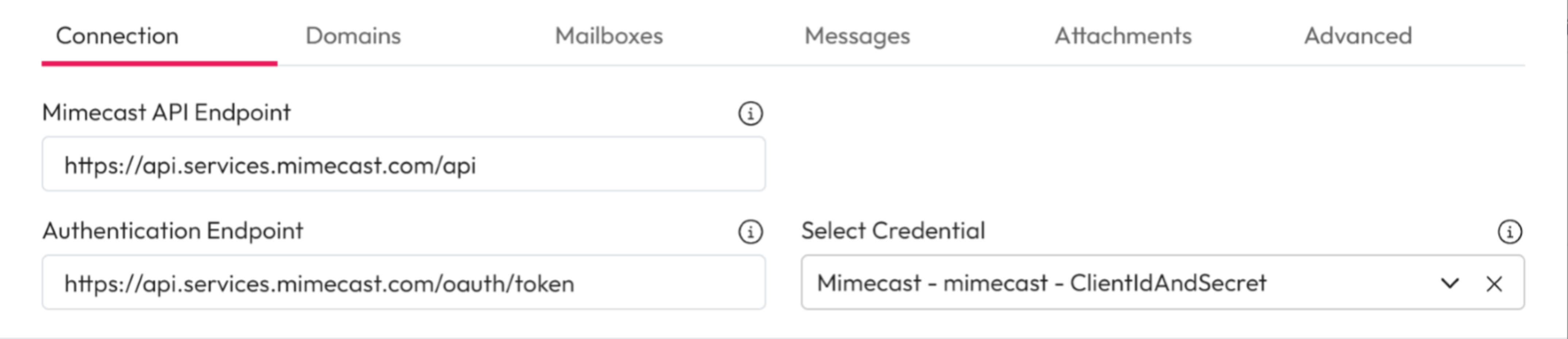
1. **Mimecast API Endpoint:** Enter the Mimecast endpoint to use for API requests.
2. **Authentication Endpoint:** Enter the Mimecast endpoint used to authenticate requests.
3. **Select Credential:** Choose the Mimecast Client ID and Secret from the dropdown.
* For support setting up credentials use [our guide on managing credentials.](https://docs.aiimi.com/aiimi-insight-engine/control-hub/security/credentials)
4. Select the Domains tab.
***
## Domains
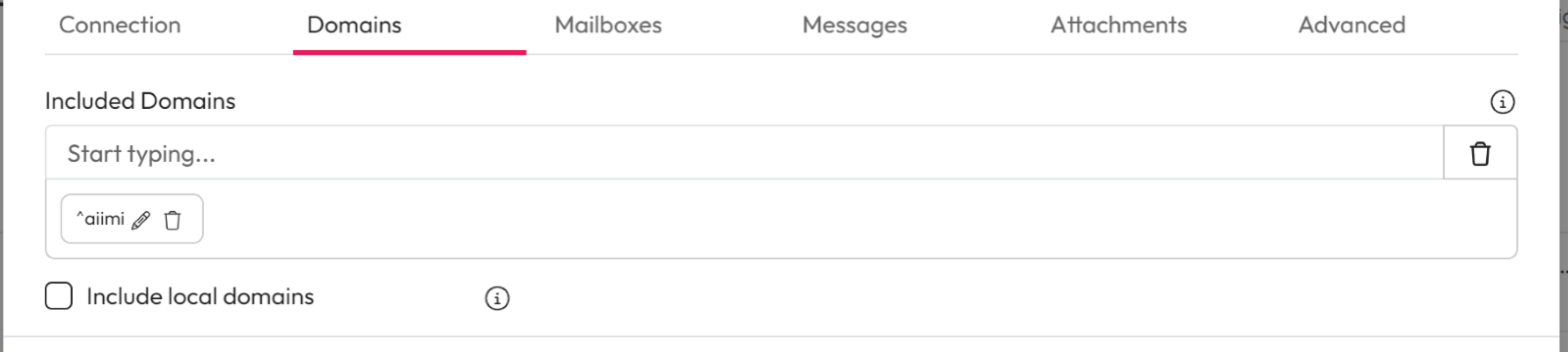
1. **Included Domains:** Choose to crawl specific domains only. Enter the domain names you want to crawl using Regular Expression.
* If blank, all domains will be crawled.
2. **Include local domains:** If checked, local domains will also be processed.
* This depends on the filtered domains.
***
## Mailboxes
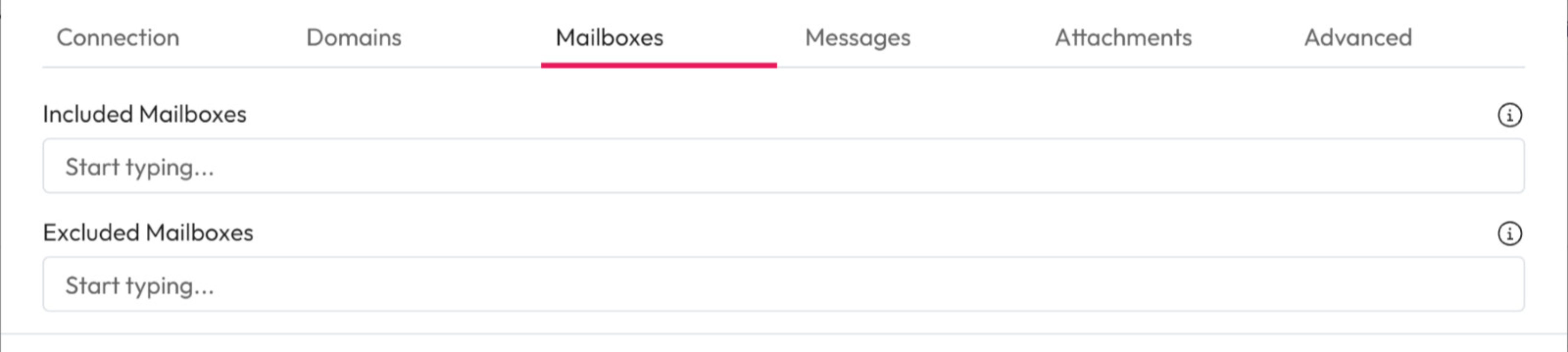
1. **Included Mailboxes:** Choose to crawl specific mailboxes only. Enter the email addresses you want to crawl using Regular Expression.
* If blank, all mailboxes will be crawled.
2. **Excluded Mailboxes:** Choose to exclude specific mailboxes only. Enter the email addresses you don't want to crawl using Regular Expression.
* If blank, all included mailboxes will be crawled.
***
## Messages
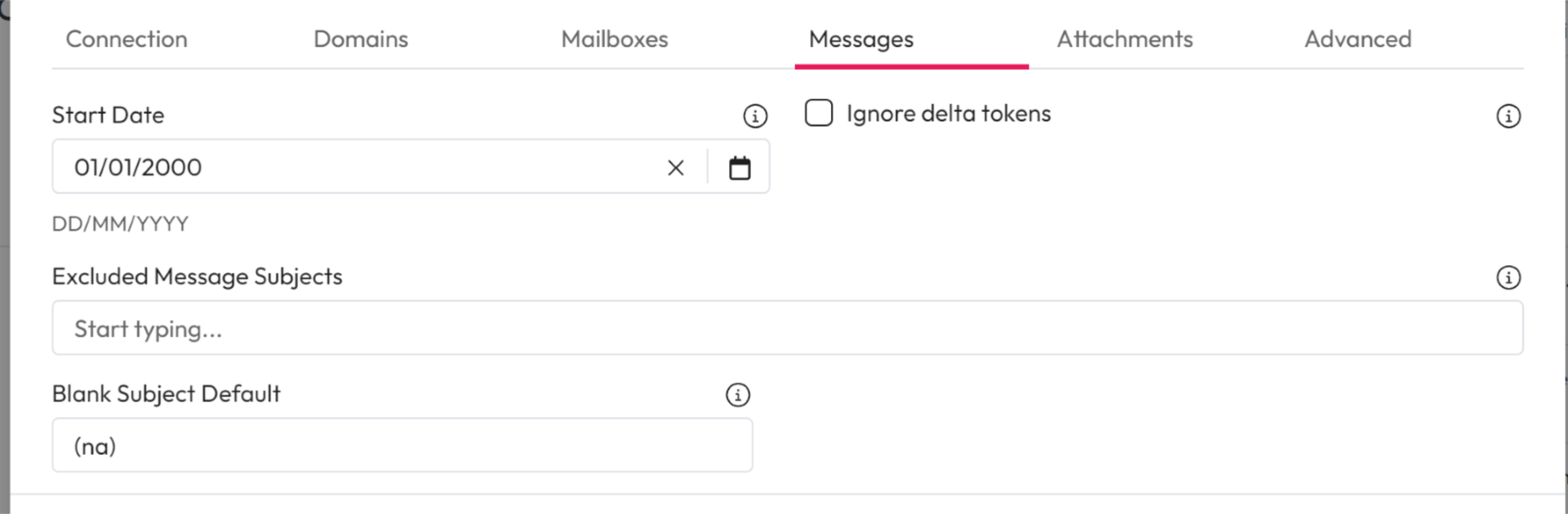
1. **Start Date:** Select the earliest date messages should be retrieved from when crawling a mailbox for the first time.
* This also applies if Ignore Delta Tokens is checked.
2. **End Date:** Select the date of the latest message to retrieve.
* Leave this empty for ongoing delta crawls.
3. **Ignore delta tokens:** Check this to ignore delta tokens and re-crawl all messages.
* Use this to find missing messages, if the Start Date is changed, or to process deleted messages.
* This is slower than a standard delta crawl.
4. **Excluded Message Subjects:** Limit the emails processed depending on their subject. Enter the subjects you don't want processed using regular expressions.
* If blank, all messages will be processed.
5. **Blank Subject Default:** Enter a default subject for any messages processed without one.
***
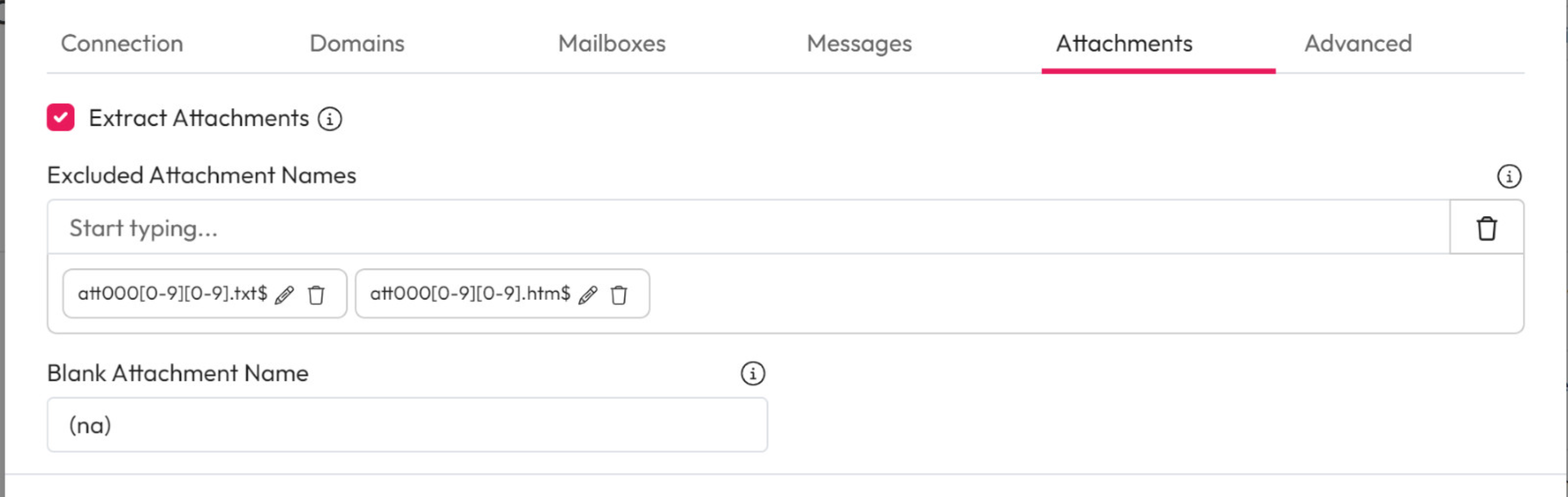
## Attachments
1. **Extract Attachments:** Check this to extract and store attachments and email separately.
2. **Excluded Attachment Names:** Limit the attachments processed. Enter the attachment names you don't want to process using regular expressions.
* If blank, all attachments will be processed.
3. **Blank Attachment Name:** Enter a default name for any attachments processed without one.
***
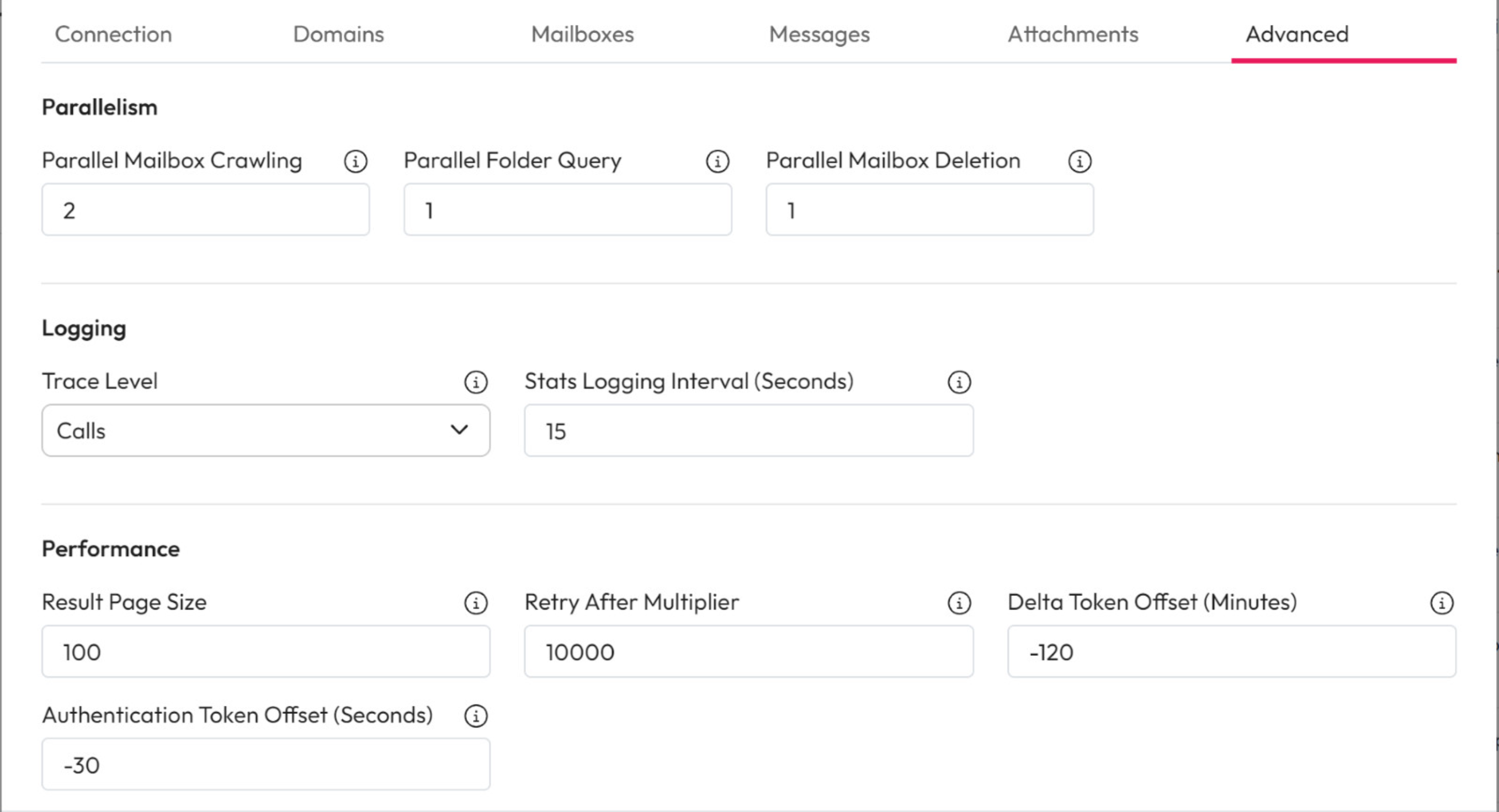
## Advanced
### Parallelism
1. **Parallel Mailbox Crawling:** Enter the maximum number of mailboxes that should be crawled at once.
2. **Parallel Folder Query:** Enter the maximum number of Elastic queries that can be processed at once.
* This may impact Elastic performance.
3. **Parallel Mailbox Deletion:** Enter the maximum number of mailboxes that can be deleted at once.
* This may impact Elastic performance.
### Logging
1. **Trace Level:** Select the connection trace level from the dropdown.
* None - Do not log graph calls
* Calls - Log URLs and status codes
* All - Log URLs, status codes, request forms and JSON responses
2. **Stats Logging Interval (Seconds):** Choose how often the Graph API call stats are logged in seconds.
* This includes the total number of calls, call rates, HTTP errors and 429 errors.
* Set this to 0 to disable stats logging.
### Performance
1. **Results Page Size:** Enter the maximum number of results retrieved in a single request.
2. **Retry After Multiplier:** Enter a multiplier to pause processing after receiving a 'retry after' message. The multiplier will be multiplied by the 'retry after' value.
* Retry after values are typically between 1 and 3. A multiplier of 1000 will convert the value to that number of seconds.
3. **Delta Token Offset (Minutes):** Enter the number of minutes to overlap that is applied to a saved delta token.
* This allows time zones to be accounted for.
* Negative values are subtracted.
4. **Authentication Token Offset (Seconds):** Enter an offset in seconds that is applied to the authentication token expiry.
* Negative values are subtracted.